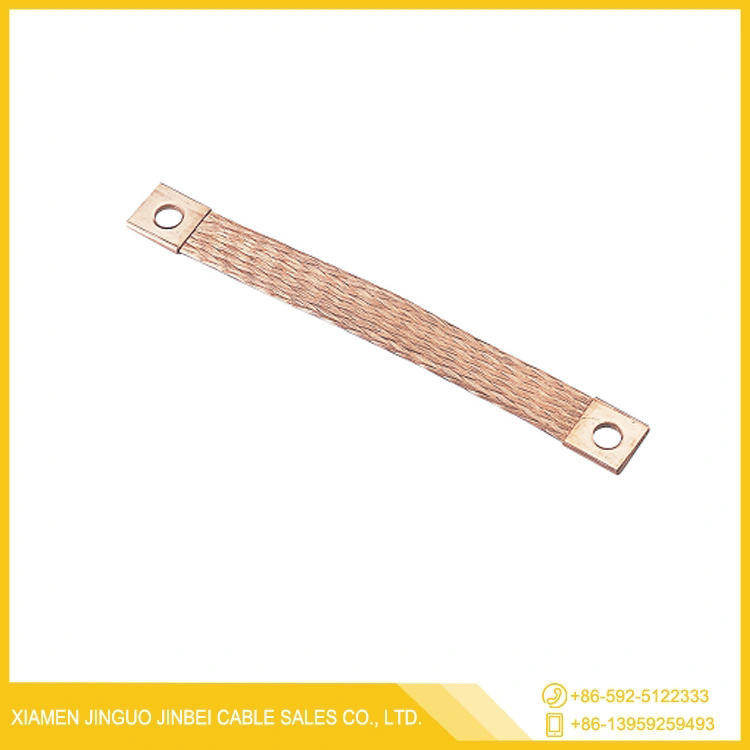
As new energy systems become more compact and powerful, Xiamen Jinguo Jinbei Cable’s Copper Braided Wire Flexible Connection reflects the industry’s move toward safer and more adaptable electrical structures.
The global shift toward electrification is changing the way power systems are designed. Electric vehicles, energy storage units, wind power equipment, and smart electrical cabinets all require connection components that can handle higher current loads while adapting to vibration, thermal changes, and limited installation space. In this environment, flexible conductive technologies are receiving increasing attention because they help solve challenges that traditional rigid connections often face.
As equipment becomes more integrated, the connection between electrical components is no longer a simple wiring issue. It has become an important factor affecting system stability, maintenance requirements, and long-term operating performance.
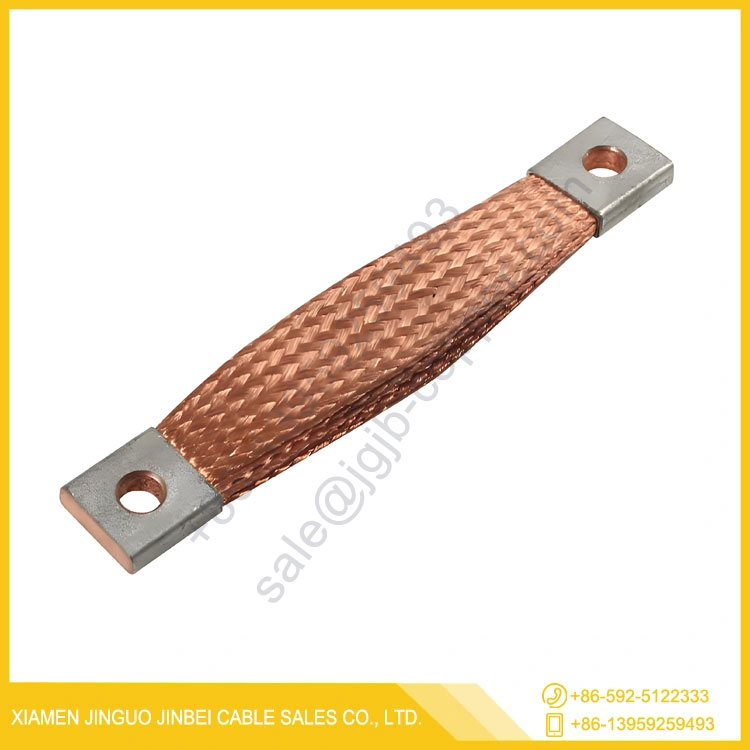
Traditional copper bars and rigid conductors have been widely used in fixed electrical systems because of their excellent conductivity. However, modern energy equipment often operates under more complex conditions.
Battery systems, power conversion units, switchgear, and industrial equipment may experience:
Rigid connections can transfer mechanical stress directly to terminals and connection points. Over time, repeated stress may affect contact stability. Flexible connection structures provide a different approach by allowing controlled movement while maintaining electrical continuity.
This is one reason Copper Braided Wire Flexible Connection technology is becoming more common in modern power applications.
Copper braided connections are typically created by weaving multiple fine copper wires into a flexible conductive structure. This design combines the electrical advantages of copper with the mechanical adaptability of a braided form.
Compared with single rigid conductors, braided structures provide several practical advantages:
| Requirement in New Energy Systems | Challenge | Contribution of Braided Copper Structure |
|---|---|---|
| High current transmission | Heat generation and energy loss | Efficient conductivity through copper materials |
| Equipment vibration resistance | Mechanical stress on terminals | Flexible structure absorbs movement |
| Compact equipment design | Difficult routing space | Easier bending and installation |
| Long-term operation | Connection fatigue | Reduced stress concentration |
These characteristics make flexible copper connections suitable for applications where both electrical performance and mechanical adaptability are important.
The development of renewable energy and electrification has expanded the application range of flexible conductive components.
Large-scale battery storage systems contain numerous electrical connection points between battery modules, power management units, and conversion equipment. During charging and discharging cycles, temperature changes can create small movements inside the system.
Flexible copper connections help accommodate these changes by providing a transition area between fixed components. This reduces mechanical stress and supports more stable operation.
Wind turbines operate in environments where vibration and mechanical movement are unavoidable. Electrical connections inside these systems need to maintain performance despite continuous operation.
Flexible conductors can help manage movement between electrical components while supporting reliable power transmission. This is especially important as wind power systems continue increasing in size and capacity.
Modern switchgear systems require compact layouts with high electrical performance. Flexible copper connections are often considered where installation space is limited or where equipment vibration needs to be managed.
The combination of conductivity and flexibility makes them suitable for various power distribution environments.
As energy equipment designs become more specialized, standardized connection methods may not always meet every application requirement.
Different systems require different factors, including:
Customized flexible conductors allow engineers to develop connection structures based on actual equipment layouts rather than adapting equipment designs around fixed components.
This trend is particularly visible in industries such as new energy vehicles, energy storage, marine electrical systems, and industrial automation.
With electrical systems becoming more complex, testing has become an important part of product development.
Flexible wire and cable products used in demanding environments often need to meet requirements related to:
| Testing Area | Purpose |
|---|---|
| Electrical performance | Confirm stable current transmission |
| Mechanical durability | Evaluate resistance to movement and vibration |
| Environmental resistance | Check performance under changing conditions |
| Safety compliance | Support application in regulated industries |
Xiamen Jinguo Jinbei Cable Sales Co., Ltd., established in Xiamen in 2001, focuses on cable products and customized connection technologies for industries including wind power, switchgear, ships, and new energy systems.
The company’s customized flexible wires have obtained UL certification, AS5000 certification, and relevant classification society certifications. Related products have also passed EN50085-1 and EN50085-2-3 testing, reflecting the increasing importance of standardized evaluation in electrical connection technologies.
The future of energy systems is moving toward higher power density and greater integration. Electric vehicles, charging infrastructure, renewable energy storage, and smart industrial equipment all require connection technologies that can operate efficiently within increasingly compact designs.
Future development trends for flexible conductive technologies may include:
As industries continue upgrading electrical infrastructure, connection components will play a more visible role in overall system performance. The progress of new energy technology depends not only on major equipment such as batteries or generators but also on the smaller components that keep these systems connected.
The increasing adoption of Copper Braided Wire Flexible Connection shows how electrical connection technology is evolving alongside renewable energy, smart equipment, and industrial electrification. Xiamen Jinguo Jinbei Cable Sales Co., Ltd. continues to participate in this development through customized flexible conductors, cable assemblies, and related connection products designed for modern energy applications.