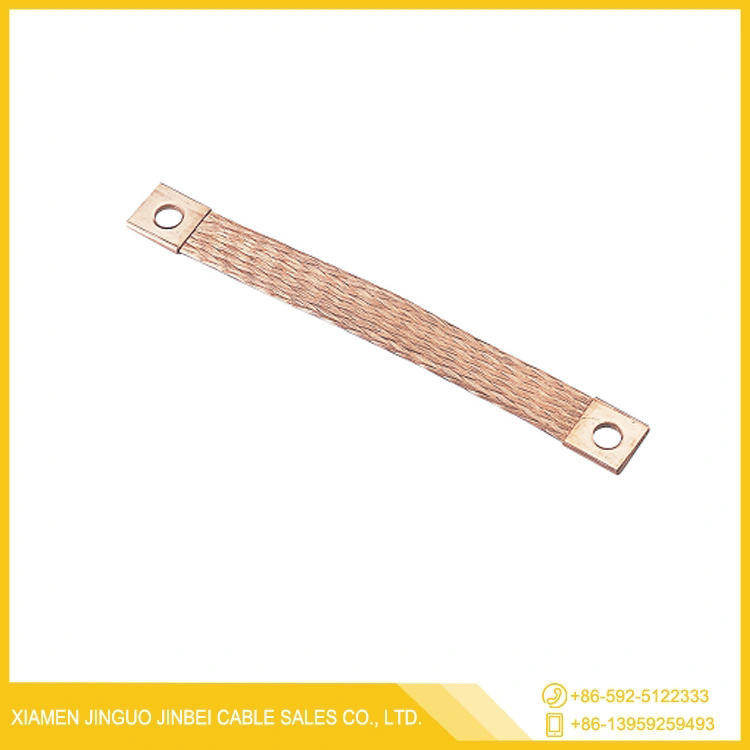
In electrical engineering, material selection has always involved trade-offs. High conductivity meant soft, easily deformable copper. Durability meant rigid, vibration-resistant alloys that sacrificed current-carrying capacity. Aesthetic appeal—visible wiring with architectural quality—was rarely a consideration at all. Braided copper challenges each of these assumptions.
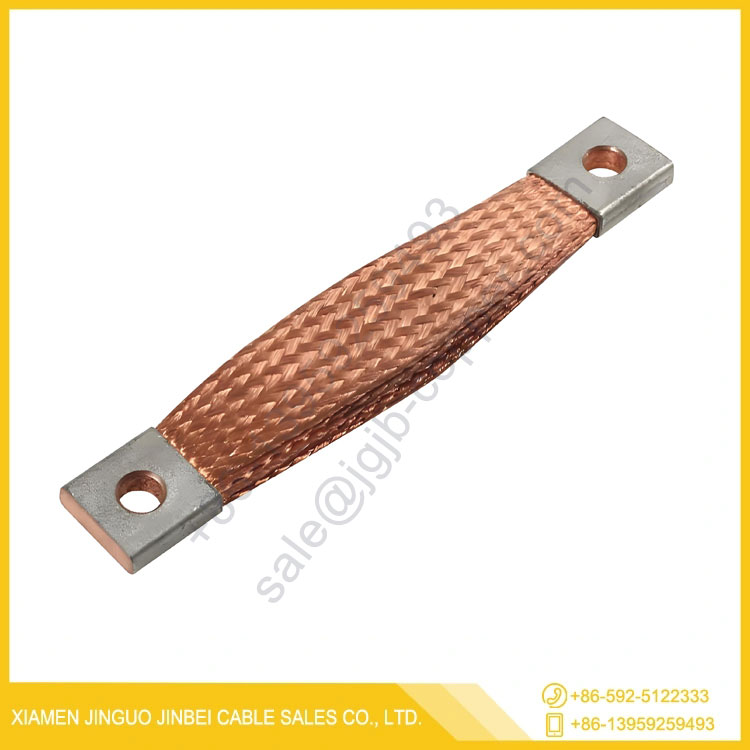
Unlike solid or stranded wire, braided copper consists of multiple pure copper strands intricately interwoven into a flat or rounded profile. This unique construction delivers three simultaneously: exceptional flexibility for moving applications, superior electrical conductivity for efficient power transmission, and a distinctive appearance that designers increasingly specify for visible installations.
The performance differences between solid wire, standard stranded wire, and braided copper are not minor—they are fundamental to how each product behaves under mechanical and electrical stress.
Solid copper wire work-hardens under repeated bending. After a relatively small number of flex cycles, microscopic cracks initiate at grain boundaries, eventually leading to complete fracture. Stranded wire improves on this by distributing flex stress across individual filaments, but the parallel-lay construction still allows filament-on-filament abrasion.
Braided copper takes a different approach. Strands are woven in an overlapping, crisscross pattern, similar to textile weaves. This construction achieves three mechanical advantages:
For applications requiring frequent bending or continuous movement—robotic cable carriers, wind turbine pitch control systems, or automotive wiring harnesses—braided copper significantly extends service life compared to conventional conductors.
The same braided geometry that resists mechanical fatigue also enhances environmental durability. Moisture and corrosive agents struggle to penetrate the dense, multi-layer weave. When combined with appropriate plating (tin, silver, or nickel), braided copper maintains low contact resistance even in marine, industrial, or outdoor installations. This makes it suitable for switchgear exposed to humidity, shipboard electrical systems in salt-laden air, and wind turbines operating in coastal or offshore environments.
Conductivity is not a single number—it depends on material purity, cross-sectional area utilization, and frequency-dependent skin effects. Braided copper addresses each factor systematically.
Xiamen Jinguo Jinbei specifies pure copper strands as the base material for its braided copper products. Unlike copper-clad aluminum (CCA) or lower-purity alloys, pure copper maintains volume conductivity of at least 100% IACS (International Annealed Copper Standard). For power transmission applications, this translates directly to lower I²R losses, reduced heat generation, and smaller required conductor cross-sections.
The braided construction offers a specific advantage at higher frequencies. Due to the skin effect—the tendency of alternating current to concentrate near the conductor surface—traditional solid or stranded wires underutilize their cross-sectional area. Braided copper , with its high surface-area-to-volume ratio and interlaced filament geometry, provides more effective current-carrying pathways at frequencies common in telecommunications, data transmission, and variable-frequency drive applications.
Typical applications benefiting from this characteristic include:
The consistent low resistance of braided copper ensures electrical signals transmit accurately without loss, maintaining system integrity across temperature fluctuations and service life.
One characteristic sets braided copper apart from every other electrical conductor category: it is frequently specified for appearance.
The braided design produces a distinctive woven metal texture—uniform, visually rhythmic, and inherently attractive. Unlike the utilitarian grey of standard PVC-jacketed cable, braided copper offers a warm metallic luster that complements industrial, vintage, and high-end design aesthetics.
Designers and system integrators increasingly specify braided copper for applications where the cable remains visible to end users:
For these applications, braided copper combines functionality with style—a combination that traditional electrical cables simply do not offer. Xiamen Jinguo Jinbei supplies braided copper in various widths, strand counts, and plating options to accommodate both technical specifications and design requirements.
Selling braided copper into wind power, switchgear, shipbuilding, or new energy storage applications requires documented compliance—not claims. Xiamen Jinguo Jinbei has accumulated a substantial certification portfolio:
| Certification / Standard | Scope |
|---|---|
| UL | Safety compliance for North American electrical markets |
| AS5000 | Australian standard for flexible cables and conductors |
| Classification societies | Domestic and international approvals for marine applications |
| National invention patents | Proprietary manufacturing processes or product configurations |
| EN50085-1 & EN50085-2-3 | Testing for cable trunking and ducting systems |
The company operates comprehensive inspection equipment to verify that braided copper products meet customer-specified standards before shipment. For downstream customers—including top-500 European switchgear companies, leading European wind power manufacturers, and China State Grid—this certification package reduces the compliance burden of supplier qualification.
Xiamen Jinguo Jinbei operates from its headquarters in Xiamen, Fujian Province, distributing braided copper and related products across domestic Chinese markets and international territories. The customer base reflects the product's technical positioning:
This customer roster validates that braided copper from Xiamen Jinguo Jinbei meets the quality, consistency, and compliance standards demanded by large-scale industrial procurement.