Xiamen Jinguo jinbei Cable Sales Co., Ltd. relates closely to the topic of Sensor cable performance in industrial systems, where shielding becomes essential in preventing interference and noise in modern signal transmission environments.
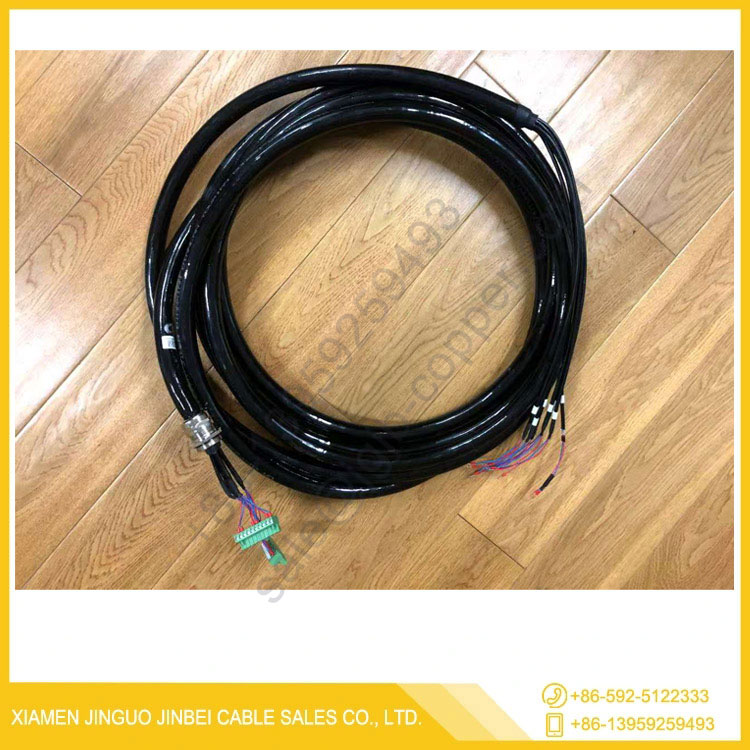
In many automation and energy systems, a Control Cable is expected to deliver stable signals even under strong electromagnetic conditions. This article explores why shielded wire structures are widely adopted to ensure signal integrity and operational stability in complex industrial applications.
Modern industrial sites are rarely electrically "quiet." From wind turbines and power switchgear to ship control rooms and energy storage systems, electromagnetic activity is everywhere. Motors start and stop, converters switch at high frequency, and large power lines continuously emit electromagnetic fields.
A Sensor cable operating in these environments faces a simple but critical problem: unwanted interference can distort or weaken the signal being transmitted. Even minor disturbances may lead to inaccurate readings, delayed responses, or unstable system behavior.
Common sources of interference include:
- Variable frequency drives (VFDs) used in motor control
- High-voltage switching equipment
- Nearby power cables running parallel to signal lines
- Wireless communication systems and RF devices
- Mechanical relay switching events
Without proper protection, the Control Cable can easily pick up these disturbances like an antenna.
Shielding acts as a protective barrier. Instead of allowing external electromagnetic noise to penetrate the conductor, it redirects or absorbs interference, keeping the internal signal stable. This is especially important in precision monitoring systems where small voltage changes represent critical data.
Shielded structures are not just an optional enhancement—they are often a necessity in demanding environments. The core idea is simple: isolate the signal path from external electrical influence.
In the product systems developed by Xiamen Jinguo jinbei Cable Sales Co., Ltd., flexible control cable designs often incorporate shielding concepts alongside fine stranded copper conductors compliant with VDE0295 / IEC228 Class 5 standards.
A modern shielded structure generally includes:
- Fine stranded copper conductor for flexibility
- TPE or PVC insulation layer for mechanical and chemical resistance
- Twisted core arrangement for reduced crosstalk
- Metallic shielding layer (braid or foil) for EMI protection
- Durable outer sheath designed for motion and abrasion resistance
This layered structure ensures thatit
can operate under both static and dynamic conditions.
Material selection plays a major role in long-term stability:
- TPE compounds: Excellent flexibility at low temperatures
- PVC blends: Balanced cost-performance ratio with chemical resistance
- High elasticity insulation: Supports repeated bending in moving systems
These materials help the cable maintain consistent electrical performance even after millions of movement cycles.
Shielded designs are widely used in systems where reliability is non-negotiable.
Typical application environments include:
- Wind power generation systems
- Power switchgear monitoring units
- Marine control and navigation systems
- New energy storage and conversion systems
- Automated mechanical production lines
In these scenarios, a Sensor cable must withstand vibration, movement, and electrical noise simultaneously.
In dynamic installations such as drag chain systems, cables are repeatedly bent and stretched. Products designed for these environments often support up to 3 million bending cycles, ensuring long operational life without signal degradation.
| Feature | Shielded Structure | Non-Shielded Structure |
| EMI resistance | High | Low |
| Signal stability | Strong | Variable |
| Mechanical durability | Enhanced (with proper sheath) | Basic |
| Suitable environments | Industrial / high-noise | Low-noise indoor |
| Typical lifespan in motion systems | Long-term (millions of cycles) | Limited |
This comparison highlights why shielding has become a standard requirement in many applications.
A major evolution in cable engineering is the integration of flexibility and shielding. In motion systems, cables must not only transmit signals but also endure continuous movement.
Key characteristics of advanced flexible designs include:
- Tight twisting of insulated cores for mechanical balance
- Compact cable geometry for controlled bending behavior
- Wear-resistant outer layers to reduce surface fatigue
- Compatibility with drag chain routing systems
These features allow it to maintain consistent performance even in high-frequency motion environments.
To ensure reliability, many industrial cables are tested under international standards and certification systems.
Common benchmarks include:
- VDE0295 / IEC228 Class 5 conductor structure
- CE and TÜV compliance for safety and performance
- RoHS requirements ensuring restricted substances are eliminated
- EN50085-1 & EN50085-2-3 testing for system compatibility
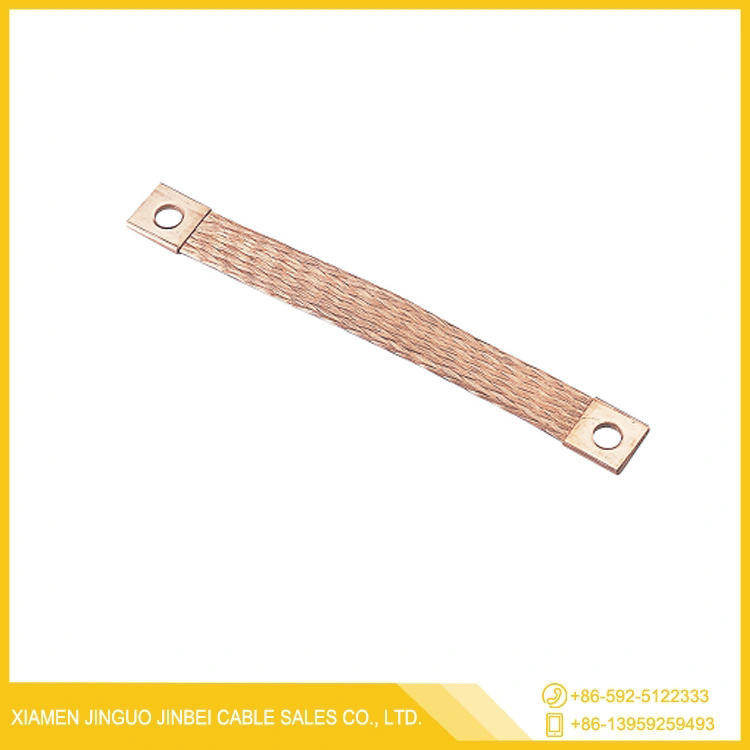
Additionally, customized flexible conductors and grounding wires used in related systems may pass UL certification and classification society approvals, supporting global deployment in regulated industries.
Electrical noise is not always visible, but its effects can be measured in system instability. Shielding reduces noise through three main mechanisms:
1. Reflection of electromagnetic waves: Metallic shielding reflects external electromagnetic fields away from the conductor.
2. Absorption and grounding: Interference currents are redirected safely to ground pathways.
3. Reduction of capacitive coupling: Twisted pair geometry reduces internal signal interaction.
Together, these mechanisms ensure that a Sensor cable maintains consistent data integrity even in high-interference zones.
When designing or selecting cable systems for industrial environments, several practical factors influence performance:
- Installation environment (static or dynamic)
- Distance from high-voltage equipment
- Required signal sensitivity level
- Mechanical stress from motion systems
- Temperature fluctuations (-40°C to +90°C in fixed installations)
In flexible systems, bending radius is also critical. Many advanced designs allow:
- Mobile installation: 7.5× outer diameter
- Fixed installation: 6× outer diameter
These parameters help prevent internal stress damage over long-term operation.
As industries move toward automation and renewable energy integration, signal reliability becomes increasingly important. Whether monitoring turbine performance or controlling switchgear sequences, stable communication ensures system safety and efficiency.
Shielded designs allow it to function as a stable "nervous system" within these complex infrastructures, reducing risk caused by unpredictable electromagnetic conditions.
Shielded wire structures remain a key solution for maintaining stable signal transmission in electrically complex environments. By combining fine stranded conductors, flexible insulation materials, and protective shielding layers, modern cable systems achieve both durability and signal integrity under demanding conditions.
In practical applications ranging from wind power systems to energy storage units, products such as customized flexible control cable and related Sensor cable solutions developed by Xiamen Jinguo jinbei Cable Sales Co., Ltd. demonstrate how engineering design directly supports reliable industrial communication without interruption or distortion.